
Why reliable asset information is the foundation of better maintenance planning, risk management and investment decisions.
Every organisation wants to make smarter decisions about its assets. But there's one important question worth asking first:
How confident are you in the information those decisions are based on?
Because let's face it, "we're pretty sure that's what we've got" isn't exactly a reliable asset management strategy.
From maintenance planning and compliance to capital investment and lifecycle forecasting, the quality of your decisions depends on the quality of your asset data.
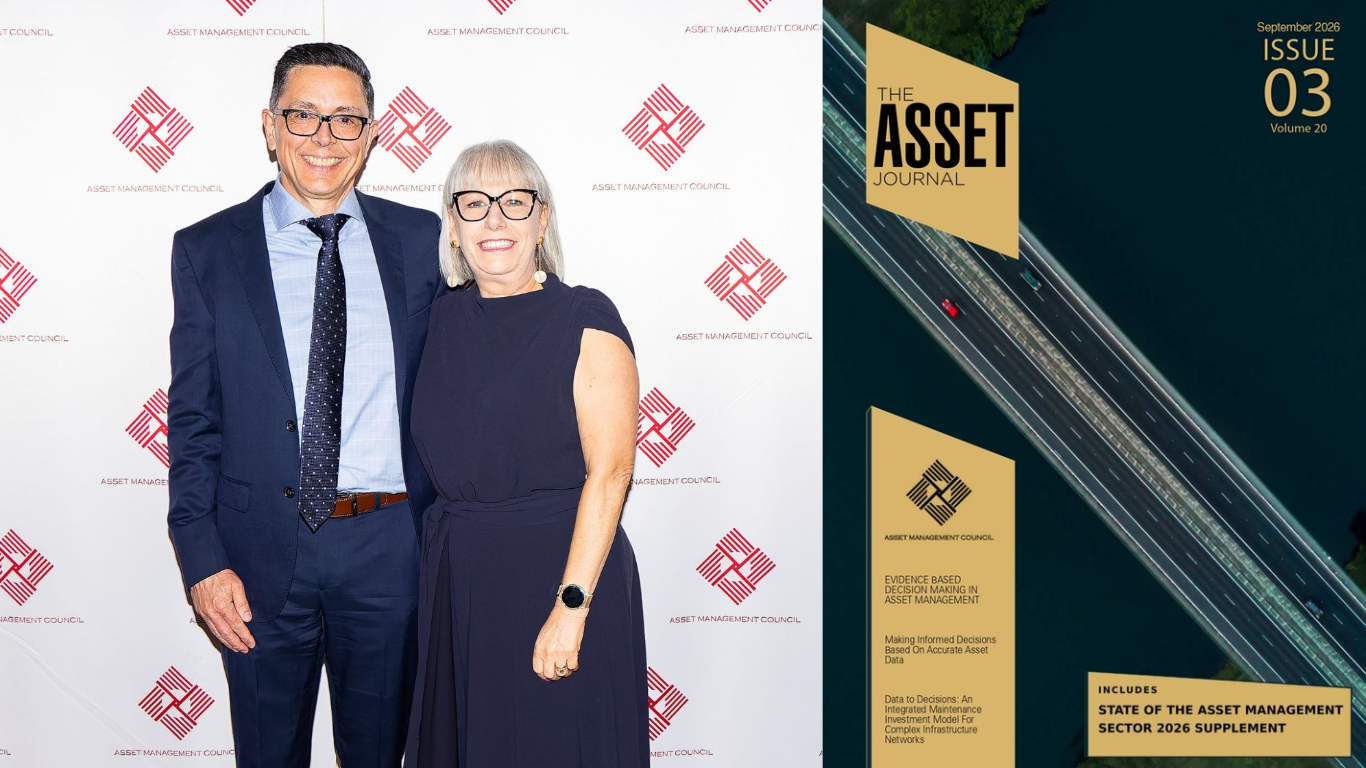
It's a challenge explored by Reduxo's Leanne Cluley and Jason Ronsisvalle in their recently published whitepaper, Making Informed Decisions Based On Accurate Asset Data, featured in the September 2026 edition of the Asset Management Council's The Asset Journal.
Building on their presentation at AMPEAK26, the paper examines how accurate asset information can help organisations move away from reactive decision-making and towards more proactive, evidence-based asset management.
Why Accurate Asset Data Matters
Asset data is more than a list of equipment, locations and identification numbers.
When properly captured, structured and maintained, it provides organisations with a clearer understanding of what assets they have, their condition, their performance and the investment required to maintain them.
Without reliable information, organisations risk making decisions based on outdated records, assumptions or incomplete asset registers.
And those gaps can have real consequences.
Poor asset information can contribute to:
Ineffective maintenance planning: Maintenance activities may not reflect the actual condition or criticality of assets.
Increased operational risk: Deteriorating or high-risk assets may go unidentified until they become a larger problem.
Unnecessary expenditure: Assets may be replaced prematurely, while others requiring attention are overlooked.
Unreliable budget forecasting: Capital and maintenance budgets become harder to justify without supporting evidence.
Reduced confidence in decision-making: Asset managers are left questioning whether the information available reflects what's actually on site.
Accurate asset data helps organisations replace uncertainty with evidence, making it easier to prioritise work, manage risk and allocate resources where they're needed most.
From Asset Registers to Better Decisions
Having an asset register is one thing. Knowing it's accurate is another.
Over time, assets are replaced, relocated, upgraded or removed. Without consistent verification and updates, the information recorded in asset management systems can gradually become disconnected from reality.
This is where structured physical asset audits and condition assessments play an important role.
By physically verifying assets, identifying discrepancies and capturing relevant information, organisations can establish a more dependable foundation for ongoing asset management.
However, as Leanne and Jason explain in their paper, achieving accurate asset data requires more than a one-off audit.
It also requires consistent data standards, clear governance, validation processes and a reliable single source of truth.
The objective isn't simply to collect more information.
It's to collect the right information, maintain its accuracy and make it useful for decision-making.
After all, a spreadsheet containing thousands of asset records is only valuable if those records can be trusted.
What Does This Look Like in Practice?
The whitepaper draws on real-world projects presented at AMPEAK26, demonstrating how accurate asset data supports better planning and operational outcomes across different industries.
Supporting Asset Planning Across 54 Health Facilities
In Victoria, Reduxo undertook asset assessments across 54 health facilities, capturing information for integration into the client's computerised maintenance management system (CMMS).
Working alongside the client and its consultant, the team established the required data structure and delivery process to support the Victorian Asset Management Accountability Framework.
The collected information was also incorporated into a lifecycle costing model, helping the organisation develop asset management plans and evidence-based budget forecasts.
This demonstrates how accurate asset information can support not only day-to-day maintenance but also longer-term financial planning.
Improving Asset Visibility in the Mining Sector
For a mining organisation, Reduxo was engaged to verify SAP Functional Locations (FLOCs) and capture more detailed asset information across a refinery.
The project included an initial pilot to establish the process and scope before progressing to the full assessment.
The result was a more reliable, centralised source of asset information within SAP, supporting improved maintenance planning and lifecycle reporting.
It's a practical example of why asset verification matters, particularly in complex operational environments where data accuracy directly influences planning and performance.
Accurate Data Is an Ongoing Responsibility
One of the key messages from the whitepaper is that asset data accuracy shouldn't be treated as a once-off exercise.
Even the most comprehensive asset audit can lose value if the information isn't maintained as assets change throughout their lifecycle.
Organisations need processes that support ongoing data quality, including consistent asset identification, standardised classifications, clear ownership and regular validation.
When these elements work together, asset information becomes more than an administrative record.
It becomes a valuable resource for:
Developing robust asset management plans.
Prioritising maintenance and renewal activities.
Identifying safety and compliance risks.
Supporting capital expenditure decisions.
Improving lifecycle forecasting and asset performance.
Ultimately, better asset information gives organisations greater confidence in the decisions they make today and the plans they develop for tomorrow.
Contributing to the Asset Management Conversation
We're proud to see Leanne and Jason's work featured in the September 2026 edition of The Asset Journal, published by the Asset Management Council.
Their paper reinforces a principle that sits at the heart of what we do at Reduxo:
Better asset data leads to better asset decisions.
As organisations face increasing pressure to manage ageing infrastructure, control expenditure and improve performance, having accurate, reliable information is becoming more important than ever.
The question is no longer simply whether your organisation has asset data.
It's whether you can confidently rely on it.
Read the Full Whitepaper
Making Informed Decisions Based On Accurate Asset Data by Leanne Cluley and Jason Ronsisvalle appears on pages 5–9 of The Asset Journal, Volume 20, Issue 03 (September 2026).
Read the Published Whitepaper – PDF
Take Control of Your Asset Data
Not sure whether your asset register accurately reflects what's on site?
Reduxo helps organisations improve confidence in their asset information through physical asset audits, asset verification and structured data collection.
Whether you're planning maintenance, preparing for future investment or simply trying to establish a clearer picture of your assets, reliable information is the place to start.